
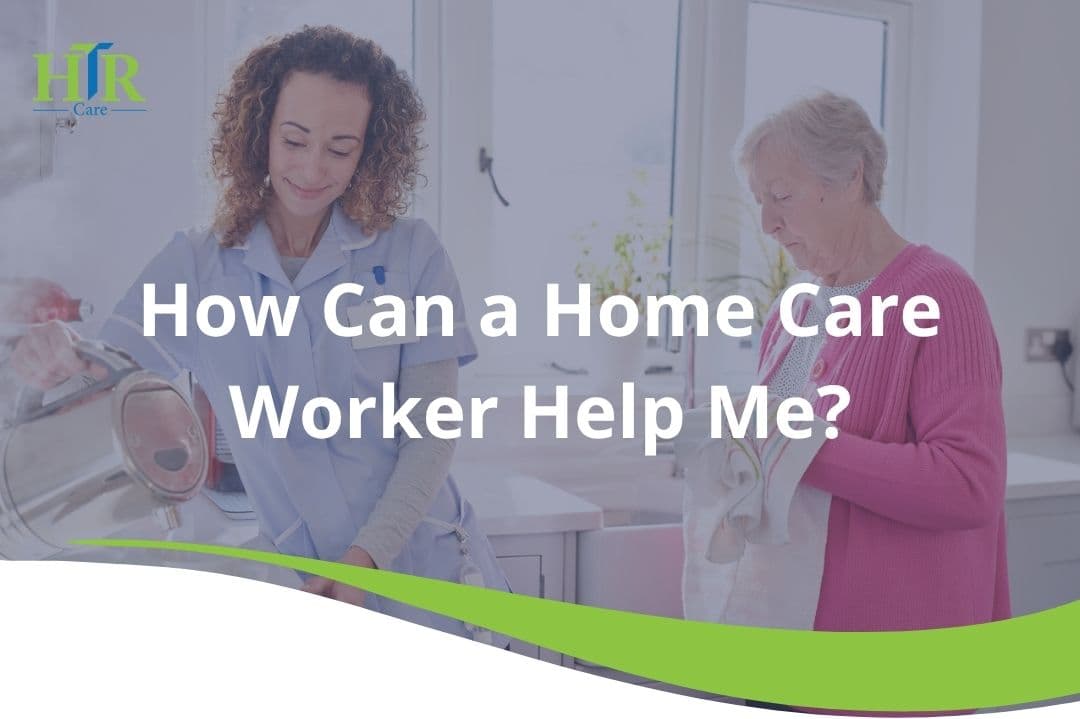
A home care worker can help with personal care, medication, mobility, meals, hydration, companionship and dementia support, all delivered in your own home.
A lot can change before someone asks for care. It might be missed medication, difficulty getting washed safely, a fridge that keeps going empty, or the strain on a husband, wife, son or daughter who is trying to do everything alone. When you ask how a home care worker can help you, you are usually asking something deeper: can life at home feel safer, calmer and more manageable again?
Yes. A home care worker can help with that, though the right level of support depends on your situation. Home care is not a single fixed service, and good home care is shaped around the person, their routine, their health needs, and the level of independence they want to keep.
Quick Takeaways
- A home care worker can help with personal care, medication, mobility, meals, hydration, companionship and dementia support, all delivered in your own home.
- Good home care preserves your independence rather than replacing it, as a care worker encourages what you can still do safely.
- Home care also relieves family carers, creating space for relationships to feel natural rather than defined by care tasks.
- Always choose a CQC-registered home care provider and ask about carer continuity, care planning, training and how concerns are handled.
1. Personal care with dignity
Personal care is one of the most common reasons people arrange home care support. For many families, it is also the hardest topic to raise, because needing help with washing, dressing or using the toilet can feel deeply private.
A trained home care worker provides personal care with respect, clear communication and sensitivity. Personal care support is not simply about completing tasks. It is about helping you feel comfortable, clean and safe without feeling rushed, embarrassed or dependent.
Personal care in home care can include help with washing, bathing and showering, dressing and undressing, oral hygiene, hair care, shaving, continence support and toileting assistance. The specific tasks in your personal care are outlined in your care plan and reviewed as your needs change.
2. Medication prompts or assistance
Medication prompts is one of the most important tasks a home care worker can provide in their daily routine. Some people remain fully independent with medicines but benefit from prompts at the right time of day. Others need more hands-on medication support, depending on what has been assessed as appropriate and safe for their condition.
Medication support from a home care worker reduces the risk of 3 common problems: missed doses, accidental duplication and confusion when several medicines are involved. These risks increase when someone is managing a complex condition or recovering from illness at home.
Consistent medication support also helps create structure across the day. When care visits happen at regular times, meals, fluids and medicines are less likely to be missed, even on difficult days when motivation or memory is low.
3. Mobility and reducing risk at home
Mobility support is one of the areas where a home care worker can make the greatest difference to home safety. Moving from bed to chair, getting to the bathroom at night, climbing stairs or walking after illness can all become risk points without the right support in place.
A home care worker can assist with mobility in line with your care plan and moving and handling guidance. Mobility support may include steadying assistance, help with transfers between furniture and mobility aids, and ensuring walking frames, wheelchairs, or hoists are used correctly and safely.
If your mobility has changed significantly, a professional assessment is recommended before making informal support arrangements. Informal help that is not matched to your level of need can put you or a family member at risk. A formal mobility assessment ensures the right support is in place from the start.
4. Meals, hydration and practical living
Meals and hydration are core parts of daily home care support. When you are tired, in pain, forgetful, or less mobile, shopping, cooking, and drinking enough can start to slip, often without you noticing the change.
A home care worker can help with meal preparation, prompting fluids throughout the day, supporting eating and drinking as needed, and ensuring the kitchen remains safe and usable. Meals and hydration support from a regular care worker often makes a noticeable difference to your energy levels, mood and general wellbeing within a short period of time.
Practical living support can also extend to light household tasks that affect your safety and comfort at home. These include tasks such as making the bed, light cleaning of frequently used areas and helping to keep the home tidy enough to reduce fall risks.
5. Companionship that supports wellbeing
Companionship is a recognised part of home care support, not an optional extra. Loneliness, low confidence and reduced social contact can affect your appetite, motivation, sleep quality and daily routine. These effects are well documented in older adults living alone, particularly those managing a long-term health condition.
Companionship in home care means having a familiar care worker who knows your preferences, notices when something is not quite right, and provides consistent reassurance and structure to your day. Companionship support can include conversation, encouragement, help attending appointments and the comfort of seeing a known face at regular times.
A good home care worker builds a relationship with you over time. That relationship is part of what makes home care feel safe, because it is not just the tasks but the continuity of knowing who is coming and that they understand your routines.
How can a home care worker help me if I live with dementia?
Dementia care at home requires patience, consistency and an understanding that needs can change from day to day. A home care worker can support with personal care, meals, medication, routine and safety in the home, and the way dementia care is provided matters just as much as the task itself.
People living with dementia often respond better to familiar patterns, calm communication and care workers who know their preferences well. Carer continuity reduces distress in dementia care. Allowing extra time, repeating information in a calm, different way, and avoiding unnecessary changes to the daily routine can all help preserve comfort and trust.
Dementia can involve 6 common challenges in the home setting: memory loss, confusion, mood changes, wandering, disrupted sleep and resistance to care. A good home care service recognises these challenges as part of the condition, not as behaviour problems, and shapes dementia care around the individual's history, habits and preferences.
Families also need realistic support when dementia is involved. A home care provider working with a person living with dementia should communicate regularly with family members, flag early changes in condition, and review the care plan as dementia progresses.
How can a home care worker help me day to day?
Day-to-day home care support covers the parts of daily life that have become difficult, tiring or unsafe to manage alone. For one person, day-to-day support may mean help getting up, washing, and dressing in the morning. For another, it may mean medication reminders, help preparing lunch, or having someone present for companionship and safety throughout the day.
Day-to-day support from a home care worker should not be overused. Good home care preserves independence wherever it is safe to do so. If you can still choose your clothes, prepare a drink or take part in making a meal, a good care worker will encourage that rather than doing it for you.
The level of day-to-day support you receive depends on your care plan. Some people need short visits at key points in the day, such as morning, lunchtime or evening. Others need longer calls or live-in support because their needs are more complex or more constant. Both visiting care and live-in care are provided within the home and aim to maintain your independence and quality of life.
Can home care help family carers too?
Yes. Home care is not only for the person receiving support; it also relieves pressure on family members who are managing care responsibilities alongside work, parenting, travel, or their own health needs.
Family carers often carry a wide range of responsibilities: checking medications, preparing meals, helping with personal care, managing appointments, watching for falls and responding to calls and concerns when they are not there. Even a few regular home care visits each week can make these responsibilities more manageable.
There is also an emotional dimension to family care. Many relatives want to help but do not want every interaction with a parent or partner to be centred on care tasks. Home care support creates space for family relationships to feel more natural again, with time together that is not defined by need.
What does good home care look like?
Good home care is consistent, person-centred and well communicated. You should know who is coming, when, what support will be provided, and how concerns will be handled. Families should not be left guessing whether their needs have been met or be forced to chase updates from the provider.
Good home care also responds to change. Someone recovering from a hospital discharge may need less support over time as they regain strength. Someone with a progressive condition may need more frequent visits, different call times or a transition from visiting care to live-in care. A home care service that reviews care plans regularly is better placed to respond to these changes early.
Good home care respects your home as your own space. Professional support should feel exactly that, professional, without becoming impersonal, rushed or routine. The best care workers treat the home with the same respect they bring to the person living in it.
When is it time to consider home care?
There is no single right moment, but there are 7 common signs that home care support may be needed: personal hygiene is slipping, meals are being skipped, the home feels less safe, medication is becoming confusing, falls or near misses are happening, a family member is exhausted from caring, or a hospital discharge has taken place and additional support is now needed to recover safely at home.
Sometimes people wait because they believe accepting care means giving up independence. In practice, the right home care support often helps people keep more of their independence for longer. A small amount of help provided early can prevent an avoidable decline later.
For others, the question is not whether home care is needed but what level of support is right. Visiting care may be enough for support at key points in the day. If you need frequent reassurance, overnight presence or continuous help, live-in care may be more suitable. The right level of home care depends on your needs, your safety, your family's capacity and your personal preferences.
What should I look for in a regulated home care provider?
A regulated home care provider is one registered with and inspected by the Care Quality Commission (CQC) in England. CQC registration means the provider must meet national standards in safety, effectiveness, care quality, responsiveness and leadership. Choosing a CQC-registered home care provider gives you a baseline assurance that the service is monitored and accountable.
CQC inspection reports are published publicly and include ratings across 5 areas: safe, effective, caring, responsive and well-led. Reading a provider's CQC report before arranging home care gives you an objective view of how the service has performed in practice, rather than relying solely on what the provider says about itself.
Beyond CQC registration, look for a home care provider that offers a consistent named carer, a written and regularly reviewed care plan, clear communication with families and transparent processes for raising concerns. These 4 indicators often separate a strong home care service from one that is simply meeting minimum standards.
What should you ask before choosing a home care worker?
Before choosing a home care worker or provider, ask 5 essential questions. First, how is care assessed, and how is a care plan created? Second, how are care workers matched to the people they support? Third, what training and qualifications do care workers hold? Fourth, how does the provider handle changes in condition or urgent concerns? Fifth, how are care plans reviewed and how often?
It is also reasonable to ask about carer continuity, specifically how consistently you will see the same care worker, and how communication with family members is handled. These are not unreasonable questions. They are part of making an informed decision about care delivered in your own home.
Trust and reliability are not optional in home care. They are central to whether support feels safe, effective and sustainable over time. The right provider will welcome these questions and answer them clearly.
For many people, the real value of home care is not just about helping with tasks. It is the return of steadiness, with meals on time, safer routines, less worry and support that fits around your life rather than disrupting it. If you are asking how a home care worker can help me, you may already be noticing that some extra support would bring relief. Getting clear advice early can make the next step feel far less daunting.
HTR Care provides CQC-regulated home care across Greater London and surrounding areas. If you would like to discuss what support might look like for you or someone you care for, our team is available to help you understand your options without pressure.

About Meena Pradhan
Care Coordinator/Senior Field Supervisor