
Sudden extreme fatigue in the elderly is most often caused by infection, anaemia, heart or lung disease, medication side effects, dehydration or malnutrition, or depression. This rapid onset of exhaustion in seniors and older adults does not resolve with rest and can signal an underlying condition that needs prompt attention.
This article explains what causes this abrupt drop in energy in the geriatric population, when it becomes a medical emergency, and how to manage and prevent it, including in elders with dementia or those recovering from surgery.
What Is Sudden Extreme Fatigue?
Sudden extreme fatigue is an abrupt, severe drop in energy that does not resolve with sleep or rest. It differs from normal age-related tiredness in duration, rest-resistance, and severity. Ordinary tiredness passes within a day and lifts after sleep, whereas extreme fatigue in older adults can continue for weeks and persist even after days of rest. Sudden extreme fatigue also interferes with basic daily tasks such as washing, dressing, or eating, which ordinary tiredness does not.
What Are the 6 Main Causes of Sudden Extreme Fatigue in the Elderly?
There are 6 main causes of sudden extreme fatigue in the elderly: infection, anaemia, heart or lung problems, medication side effects, poor intake, and depression. Each cause acts on the geriatric body differently, and several often occur together in the same elder.
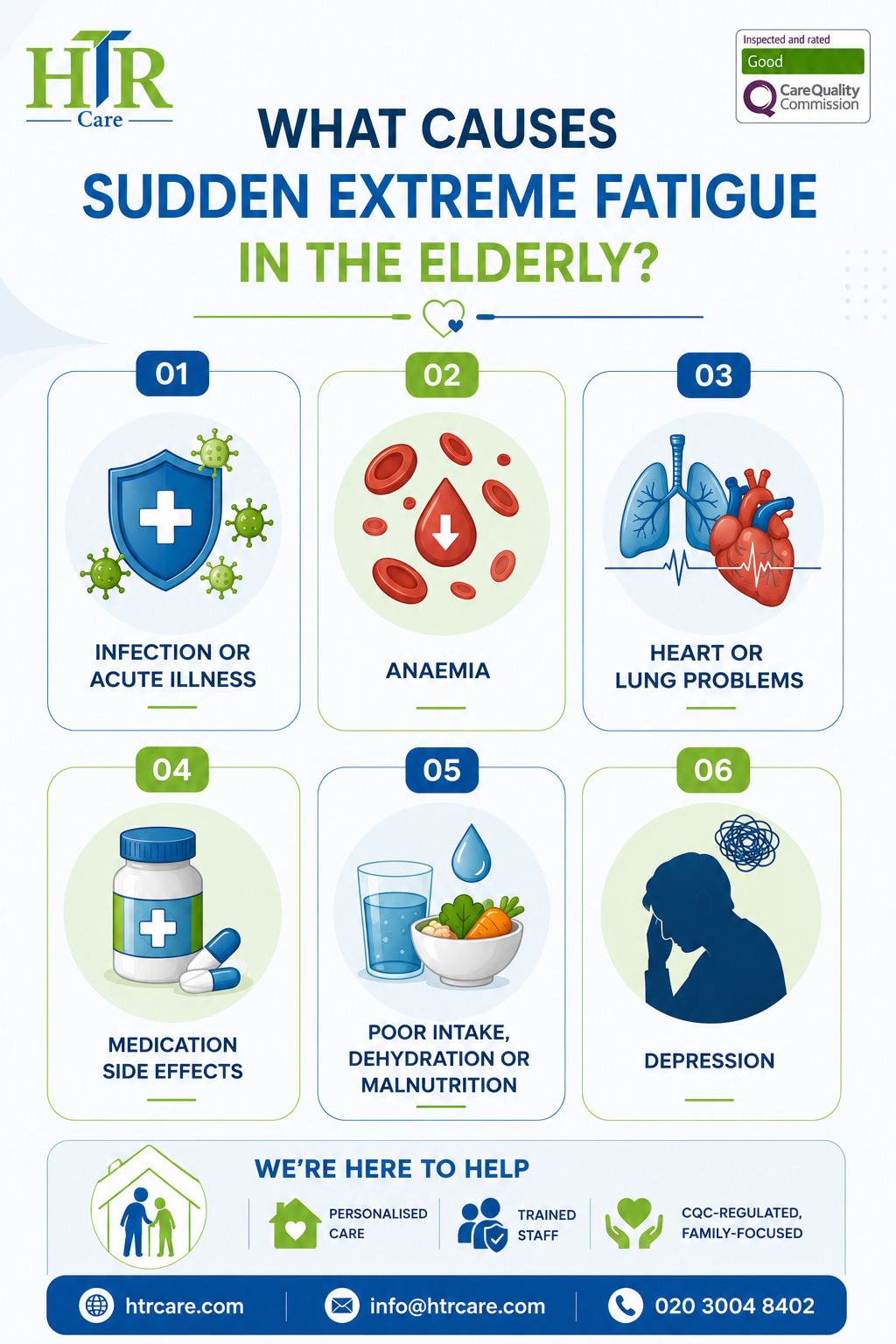
1. Infection or Acute Illness
Acute infection is a leading cause of sudden extreme fatigue in older adults, particularly urinary tract infections (UTIs), pneumonia, and sepsis. Seniors frequently present with atypical symptoms during acute illness. Rather than a high temperature, an infection in an elder often first presents as sudden confusion or lethargy, with a noticeable, abrupt drop in alertness before any classic infection symptoms.
2. Anaemia
Anaemia is one of the most common causes of sudden extreme fatigue in the elderly. A systematic review published in BMC Geriatrics by Gaskell et al., based at the University of Oxford, found an anaemia prevalence of 12% among community-dwelling older adults, rising to 40% in hospital admissions and 47% in nursing home residents. Prevalence increases further with age, exceeding 25% in community-dwelling adults over 80, and was found to be slightly higher in men than women overall. Reduced haemoglobin (Anaemia) lowers the oxygen-carrying capacity of the blood, which causes persistent exhaustion, breathlessness, and dizziness even during light activity.
3. Heart or Lung Problems
Heart and lung conditions cause sudden extreme fatigue in seniors by reducing the oxygen supply reaching the body's tissues. Symptomatic chronic heart failure rises sharply with age, from 3% prevalence at age 45 to 54 up to 22% at age 75 to 83, according to the CARLA Study by Tiller et al., published in PLOS ONE. Fatigue is a core symptom of heart failure. Research published in Heart & Lung: The Journal of Cardiopulmonary and Acute Care reports fatigue prevalence ranging from 16% to 91% among heart failure patients, depending on disease severity. Chronic obstructive pulmonary disease (COPD) produces a similar effect in the elderly, since impaired lung function reduces oxygen delivery and increases the effort needed for basic movement.
4. Medication Side Effects
Medication side effects, particularly from taking multiple drugs at once, are a common and often overlooked cause of sudden extreme fatigue in older adults. Ageing changes how the geriatric body processes and eliminates medication, which increases sensitivity to side effects including drowsiness, dizziness, and weakness. The British Geriatrics Society cites UK data showing that a large proportion of adults aged 75 and over take four or more regular medicines, with even higher medicine counts common among care home residents. A medication review with a GP or pharmacist can identify drugs contributing to fatigue and lethargy.
5. Poor Intake, Dehydration, or Malnutrition
Poor food and fluid intake causes sudden extreme fatigue in the elderly by depriving the geriatric body of the energy and hydration it needs to function. Age UK estimates that around 1 in 10 people over 65 in the UK, roughly 1.3 million, are malnourished or at risk of malnutrition. Dehydration compounds the problem: the UK DRIE Study, which assessed 188 residents across UK long-term care homes, found 20% were dehydrated based on serum osmolality testing. Reduced thirst sensation, mobility limitations, and swallowing difficulties all reduce fluid and food intake in older adults, and the resulting fatigue often develops gradually before appearing suddenly.
6. Depression
Depression is a significant and frequently missed cause of sudden extreme fatigue in elderly people. A population study published in the British Journal of Medical Practitioners found a depression prevalence of 8.7% among older adults in England and Wales, rising to 9.7% when dementia-related depression is included. Age UK and YouGov research found that 7.7 million UK adults aged 55 and over report having experienced depression. Depression in seniors often presents without low mood, appearing instead as physical exhaustion, loss of appetite, and social withdrawal, which makes it easy to mistake for a purely physical illness caused by ageing alone.
What Medical Conditions Cause Sudden Fatigue in Elderly People?
Beyond the 6 main causes, several specific medical conditions commonly cause sudden fatigue in the geriatric population:
Hypothyroidism, which slows metabolism and produces persistent tiredness, cold intolerance, and weight gain
Type 2 diabetes, which causes fatigue through unstable blood sugar levels
Chronic kidney disease, which reduces the body's ability to clear waste and regulate red blood cell production
Sleep apnoea, which disrupts overnight breathing and prevents restorative sleep
Each of these conditions is treatable once identified through blood tests, imaging, or a sleep study.
When Is Sudden Fatigue in an Elderly Person an Emergency?
Sudden fatigue is a medical emergency when it appears alongside confusion in the elderly, breathlessness, chest pain, fainting, or a rapid heartbeat. These combined symptoms can indicate sepsis, a heart attack, or a stroke, all of which require immediate hospital assessment. The Sepsis Alliance identifies the following as urgent warning signs in seniors:
Sudden confusion or an abrupt change in mental state, which is more common among older people
Fever, or a body temperature lower than normal
Rapid heart rate
Rapid breathing
An abrupt change in mental state in an elder should never be dismissed as normal ageing and always warrants same-day medical review.
How to Manage and Prevent Fatigue in Elderly People
Managing fatigue in elderly people starts with identifying and treating its underlying cause through a GP assessment. Regular medication reviews reduce the risk of polypharmacy-related fatigue and lethargy. Consistent hydration and a balanced diet with adequate protein, iron, and vitamin B12 address nutritional causes. Light daily movement, including short walks or seated stretches, helps counter the fatigue caused by prolonged inactivity. Routine blood tests can detect anaemia, thyroid dysfunction, or kidney problems before they cause severe symptoms, and addressing social isolation and mental health through social activities or professional support reduces fatigue linked to depression.
What Causes Sudden Exhaustion in an Elderly Person with Dementia?
Sudden exhaustion in an elderly person with dementia is often linked to sundowning, a pattern of increased confusion and agitation in the late afternoon or evening. The Alzheimer's Society describes sundowning as a pattern of increased confusion and agitation that some people with dementia experience in the late afternoon or evening. Recognised contributing factors include tiredness, unmet physical needs such as hunger or pain, overstimulation, and a disturbed body clock. However, an abrupt change in exhaustion or behaviour can also signal an infection, dehydration, or a medication side effect rather than sundowning alone, so a new or worsening pattern always warrants a GP review to rule out a treatable cause.
What Causes Sudden Tiredness in an Elderly Person After Surgery?
Sudden tiredness in an elderly person after surgery is caused by postoperative fatigue syndrome, a physiological response to the stress of the procedure itself. Research published in Frontiers in Medicine on elderly patients undergoing major abdominal surgery reports that postoperative fatigue syndrome occurs in up to 92% of cases and persists beyond three months in around 10% of patients. Surgery triggers an inflammatory response and the release of stress hormones, both of which cause fatigue. Elderly patients typically take longer to recover than younger patients, and existing conditions such as anaemia, diabetes, or heart disease can extend the exhaustion further. Adequate nutrition, hydration, and gradual movement support recovery.
Common Misconceptions About Fatigue in Elderly Women and Men
The most common misconception about fatigue in elderly people is that it is a normal and untreatable part of ageing. Sudden extreme fatigue nearly always has an identifiable and often treatable cause. A second misconception assumes fatigue affects men and women equally: anaemia prevalence is notably higher in men over 80, while depression-related fatigue is reported more frequently by women. A third misconception treats fatigue as a standalone problem rather than a symptom, which can delay diagnosis of the underlying condition causing it.
How Can a Home Care Worker Help Your Elderly Loved One?
A home care worker helps manage sudden extreme fatigue in an elderly person by spotting early changes between family visits. Regular contact means a carer often notices confusion, reduced appetite, or an abrupt drop in energy before it becomes an emergency. Support includes prompting medication as prescribed, encouraging regular fluid and food intake, supporting light movement, and flagging sudden changes to a GP promptly. This consistent presence often catches rapid-onset fatigue in a senior while the underlying cause is still easily treatable.
Concerned about sudden fatigue or changes in an elderly loved one’s health? HTR Care provides compassionate home care in Uxbridge, across Greater London, Berkshire and Buckinghamshire, with trained carers offering regular monitoring, practical daily support and prompt escalation when something does not seem right. Contact HTR Care today to discuss the right level of support for your family.

About Meena Pradhan
Care Coordinator/Senior Field Supervisor